Architecture
Foundgine keeps meaning, authority and physical execution separate. Every transport and provider fits around the same core lifecycle.
Canonical lifecycle
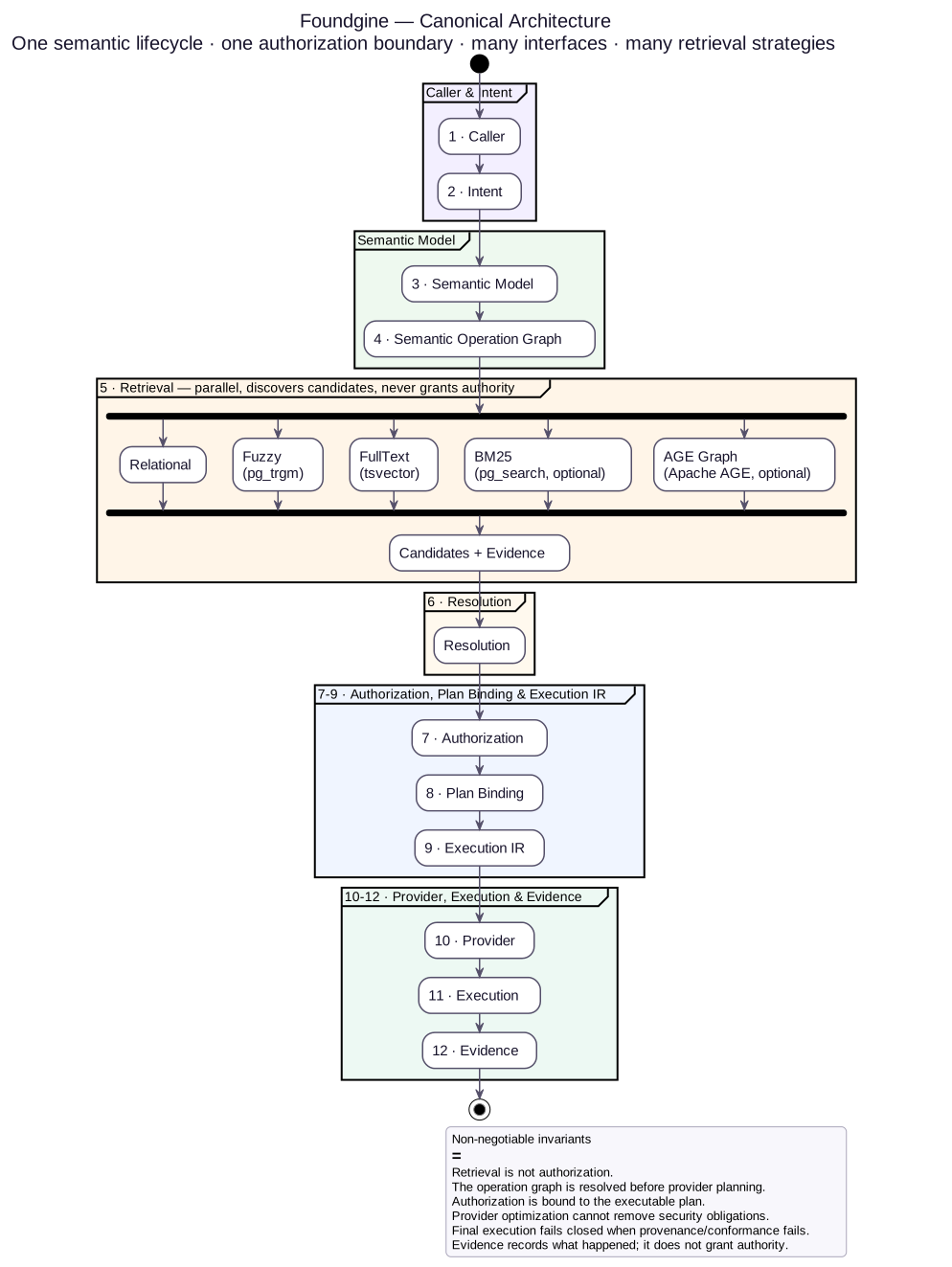
The diagram is the reference map for the entire site. Other pages zoom into individual sections rather than defining alternate pipelines.
Semantic model
Foundgine.Core owns the provider-independent semantic contracts: entities,
fields, relationships, intent, resolution, validation, capabilities and authorization
structures. The semantic model describes application meaning, not storage
implementation.
Metadata
Structural metadata describes what exists in the underlying model. AOT generation can produce that information at compile time. Metadata helps build the semantic model; it does not replace semantic design.
Read Metadata → Semantics and AOT for the implementation details.
Retrieval and resolution
Retrieval is a candidate-discovery stage. Relational lookup, fuzzy matching, full-text, optional BM25 and optional graph similarity can provide candidates plus provenance. Resolution decides what those candidates mean against the semantic contract.
Retrieval is evidence. Resolution establishes meaning. Authorization establishes authority.
For free-form language, see Lexical grounding and Grounding decisions.
Authorization and plan binding
Authorization evaluates the resolved semantic operation graph before provider-specific planning. The resulting decision is bound to the plan through its semantic and authorization fingerprints.
Optimization can change physical shape, but it must preserve the authorization binding. The final execution gate checks that the provider artifact still conforms to the exact execution representation it came from.
Execution and providers
Foundgine.Runtime orchestrates execution.
Foundgine.Providers supplies concrete infrastructure such as
SQL/PostgreSQL, InMemory, MCP and AI/model integrations.
Foundgine.Extensions contains optional framework integrations such as Hot
Chocolate GraphQL.
Provider code owns physical concerns. It does not redefine the application's semantic authorization policy.
Adapters
GraphQL, JSON, MCP and AI integrations are callers/adapters around the same boundary. They translate their native request shape into Foundgine intent and receive the resulting application-controlled execution.
Security invariant
Untrusted intent
      ↓
Semantic resolution
      ↓
Authorization
      ↓
Security-preserving plan
      ↓
Provider conformance
      ↓
Execution
Capability discovery is descriptive. It never replaces authorization.