From intent to authorized execution.
Foundgine is a programmable semantic execution platform for .NET and Java. It separates what a caller asks for from what the application allows and how that request reaches a physical provider.
Callers express intent.
Applications define entities, fields, relationships and capabilities in a semantic model. Callers do not need to know the storage shape.
The application stays in control.
Identity and authority come from the host. Foundgine resolves and authorizes every operation before physical execution.
Providers execute the result.
Planning stays provider-independent until the execution boundary. SQL, InMemory and other integrations handle physical work.
One lifecycle, many callers.
Application code, JSON, GraphQL, MCP and AI tools can enter the same execution path. Retrieval may discover candidates, but it never becomes an authorization path.
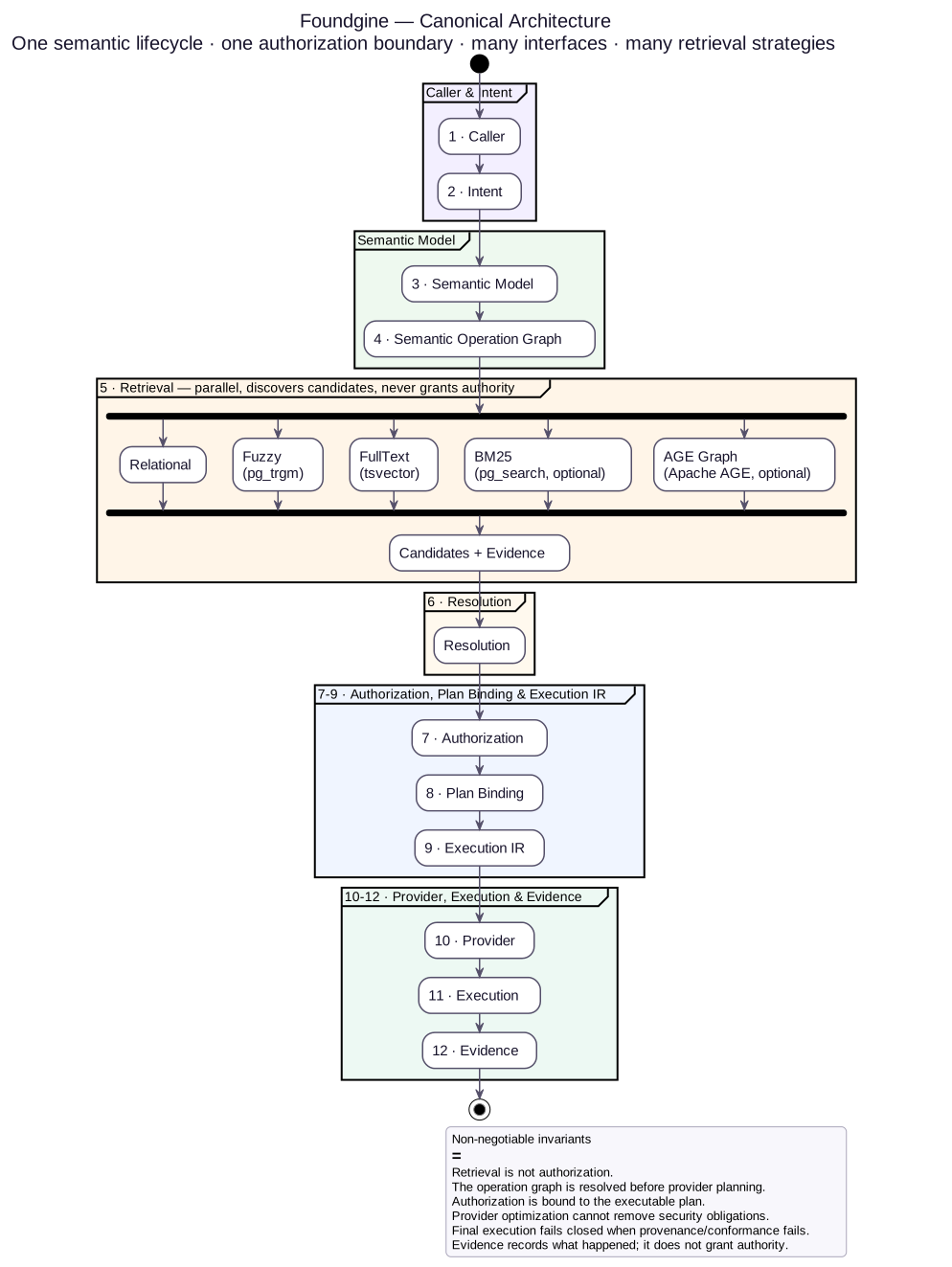
“Show me overdue purchase orders from our top supplier in Texas.”
Follow one natural-language request from the caller, through semantic resolution and retrieval, into authorization, plan binding, ExecutionIR, PostgreSQL and evidence.
Read only what you need.
The public site is the guided path. Each page is intentionally short and points to a deeper page or repository document when you want the implementation details.
| Stage | Start here | Go deeper |
|---|---|---|
| Understand | What is Foundgine? | Why Foundgine · Application categories |
| Build | Getting started | Starter sample · Step-by-step tutorial |
| Trace | Walkthrough | Runtime · Open Intent API |
| Design | Architecture | Metadata → Semantics · Mapping |
| Integrate | AI agents | AI agent guide · Packages |
| Secure | Security | Authorization · Security model |
| Prove | Samples | Benchmark evidence · Supply Chain E2E · PenTest |
Callers describe what they want. The application defines what exists and what is allowed. Foundgine determines how the authorized meaning executes.
For package selection, see Packages. For the tested application story, see the Supply Chain case study.