Foundgine
AOT metadata and connections
Foundgine’s AOT path moves stable domain knowledge out of the request path.
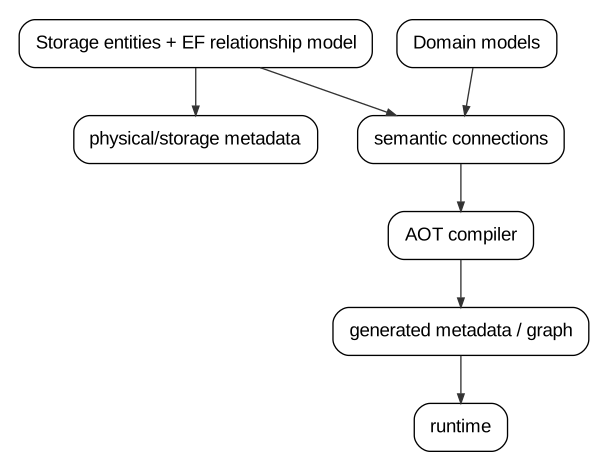
Important boundary
Foundgine does not generate or populate entity/model objects.
- EF remains the authority for entity schema, keys, foreign keys, and database relationships.
- A Foundgine model describes application-facing data semantics.
- A connection describes that a model can visit a known target entity.
- The runtime follows the generated connection; it does not discover the relationship.
This deliberately avoids becoming an object mapper or a second ORM.
Connections
A model can declare a semantic connection:
[FoundgineModel]
public sealed class Product
{
    [FoundgineConnection(typeof(Contract))]
    public Contract Contract => throw new NotSupportedException();
}
The property is a declaration of topology. Foundgine never evaluates it and never constructs a Contract.
The generator emits:
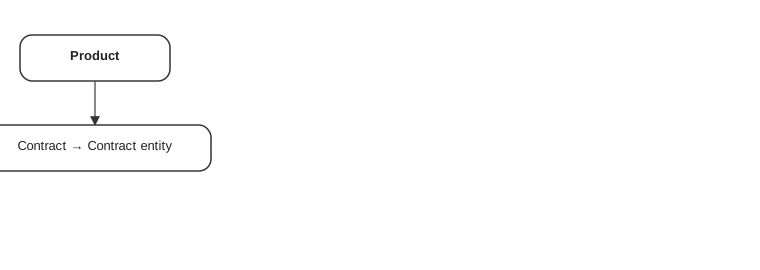
Relational key details remain on the storage side. This is intentional: a connection says what may be visited, while EF/entity metadata says how the storage relationship exists.
Mapping direction
Field correspondence should remain convention-first. When a model and entity need explicit semantic correspondence, the intended next layer is ordinary C#/LINQ expression analysis at build time. Those expressions describe a plan; they are not runtime mappers.
Special conversions such as ProductType → ContractType should therefore be represented as compile-time transformations in the mapping IR, rather than requiring generated entity/model population.
Runtime goal
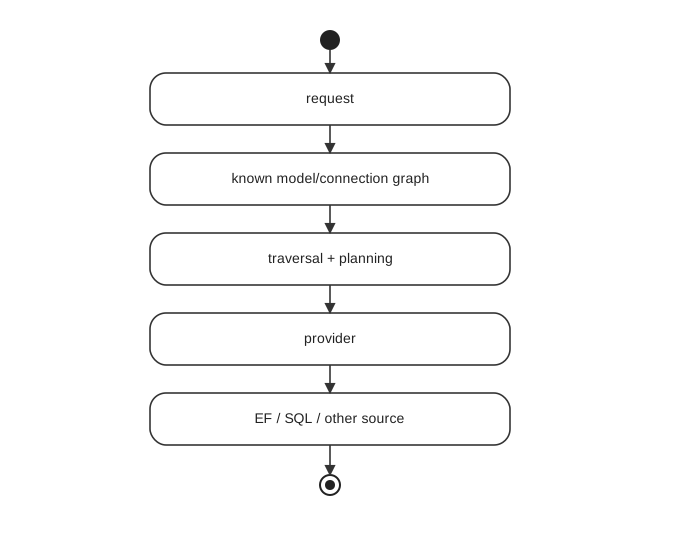
The expensive discovery work belongs in AOT. Runtime should bind request-specific values and execute the already-known topology.
Next: Public API