Foundgine
Authorization
Foundgine treats authorization as part of semantic execution rather than as a transport-specific check around execution.
The model has four important boundaries:
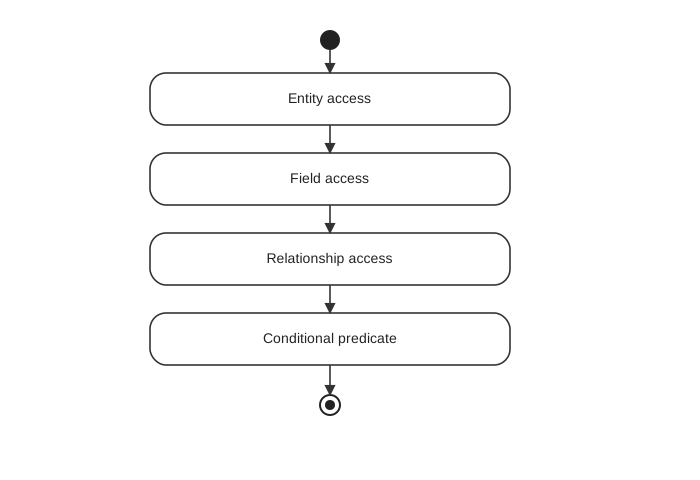
A policy can therefore describe a domain such as:

Authorization in the canonical lifecycle
Authorization is stage 7 of the canonical lifecycle: Caller → Intent → Semantic Model → Semantic Operation Graph → Retrieval → Resolution → Authorization → Plan Binding → Execution IR → Provider → Execution → Evidence. Retrieval can discover candidates, but authorization evaluates the resolved operation graph under the trusted semantic contract.
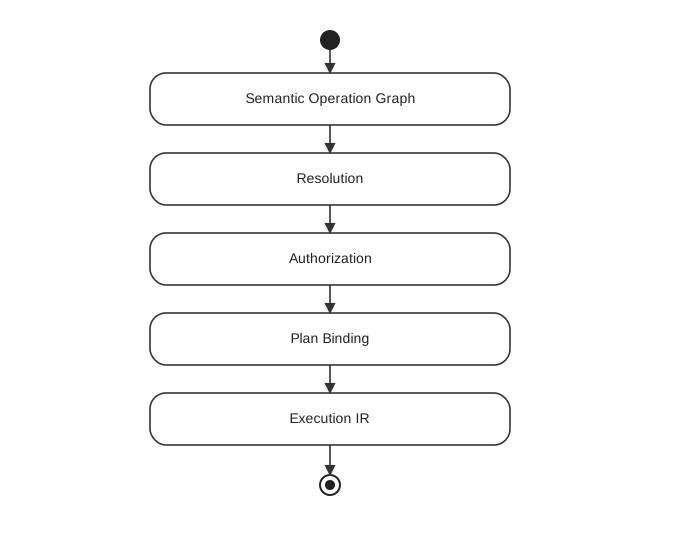
A retrieval result, capability description, or caller-supplied claim never becomes authority merely because it helped construct intent.
Semantic operation graph and authorization provenance
Authorization applies to the complete resolved semantic operation graph. The graph is validated before policy evaluation and the resulting decision is captured as immutable evidence.
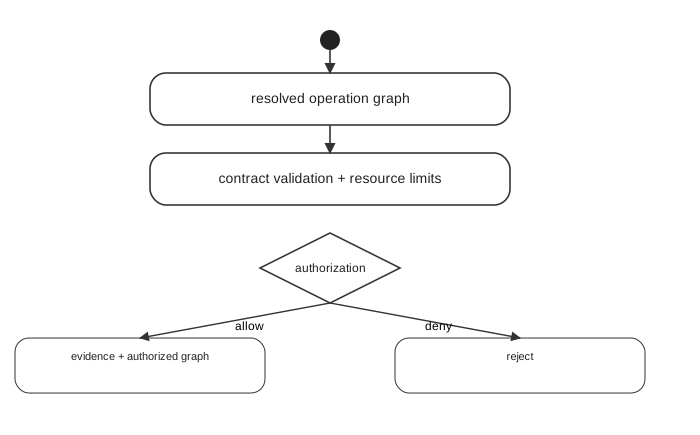
The plan binding contains two identities:
- the semantic contract fingerprint;
- the authorization-decision fingerprint.
This is provenance, not a reusable permission token. A plan cannot be detached from the contract or authorization evidence that produced it. Rewrites must preserve the binding, and execution rejects mismatches.
The final provider execution gate adds a second proof: the provider artifact must be security-conformant for the exact ExecutionIR being executed.
Conditional authorization
Conditional access is represented by the small provider-independent predicate
IR in Foundgine.Core.Abstractions.
For example:
Expression<Func<UserContext, Employee, bool>> CanReadEmployee =>
    (user, employee) => user.TenantId == employee.TenantId;
The generator/policy layer can represent the condition as:
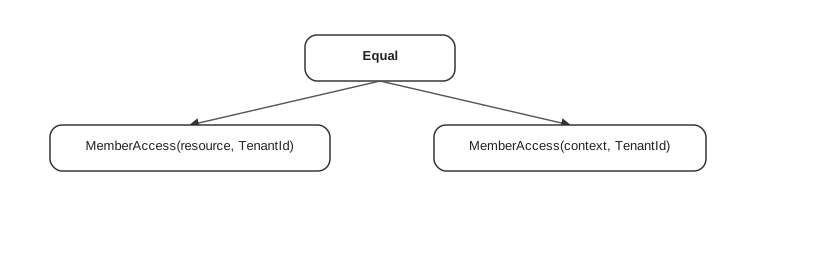
The expression tree is not retained and is never compiled or invoked by the runtime. The predicate travels with the semantic graph into the provider-independent execution plan.
Providers lower that predicate into their native representation. The SQL provider, for example, turns the resource member into a storage column and binds the context member as a runtime parameter.
Capability discovery
Foundgine also exposes a provider-independent capability description through
DescribeCapabilities().
This is intended for callers that need to understand what they can ask for, including AI agents:
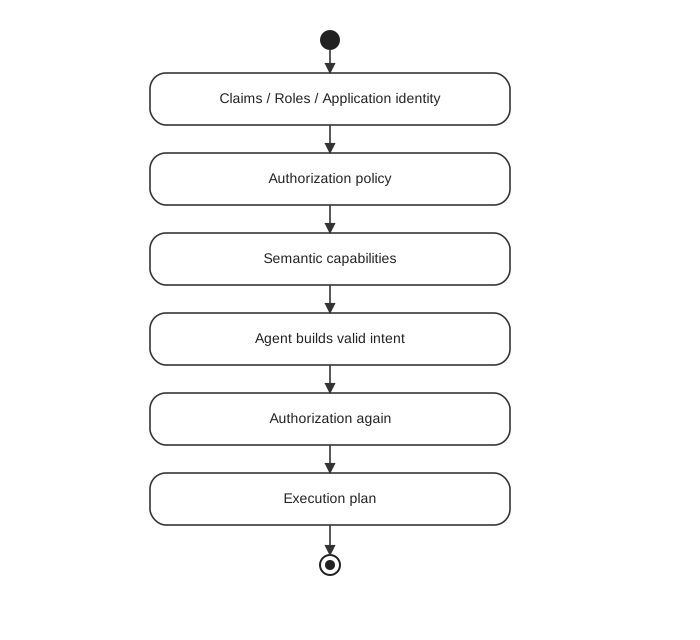
Capability discovery is descriptive, not authoritative. An agent or API caller must never be trusted because it previously received a capability snapshot. The execution pipeline evaluates authorization again before a plan is produced.
The capability model reports Denied, Allowed, or Conditional for entity,
field, and relationship access. Policy implementation details are not exposed
as a requirement for the caller.
Write authorization
Write access is explicitly opt-in. Existing read-only policies do not accidentally become write-enabled.
Mutation authorization checks:
- entity write permission;
- field write permission for supplied values;
- field read permission for returned fields;
- read permission for fields and relationships used by mutation filters.
MutationPlanner remains structural. MutationAuthorizer applies the
semantic policy after planning and before provider compilation.
Caching boundary
Authorization predicates must remain part of execution semantics.
A provider plan cache may safely reuse an already-authorized plan shape, but it must not turn:
resource.TenantId == context.TenantId
into an authorization-free cached plan.
The intended model is:
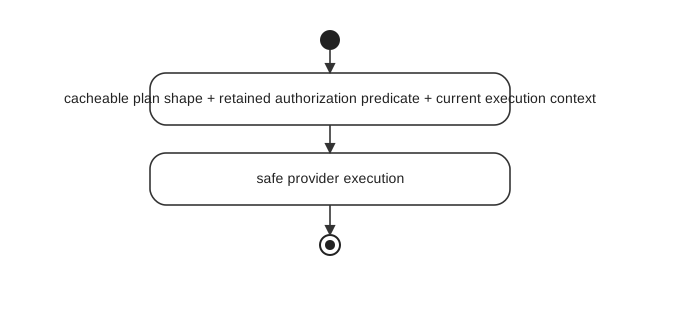
Claims, roles, identity providers, and policy administration are deliberately outside this layer. They can sit above Foundgine and produce semantic policy decisions without becoming part of the Foundgine core.
SupplyChain reference matrix
The Foundgine.SupplyChain.Advanced sample is the canonical worked example for the policy boundaries above. It deliberately mixes manual and generated semantic authoring and then applies a single provider-independent policy model to the resulting SemanticModel.
It demonstrates:
- entity allow/deny;
- field allow/deny;
- relationship allow/deny;
- conditional tenant predicates;
- opt-in write authorization;
- named-operation refinement;
- capability discovery as non-authoritative metadata; and
- MCP adversarial calls that attempt to cross those boundaries.
The sample also separates transport authentication from semantic authorization: the MCP server resolves a fixed actor/token into a tenant and role, then constructs the semantic policy for that actor. A caller cannot promote itself by supplying a different role in the semantic request.
Next: Security