Foundgine
AI agent integration
Foundgine’s AI integration is deliberately small: it exposes semantic execution as tools without making Foundgine depend on a particular LLM provider or agent framework.
AI agents use the same canonical lifecycle
An agent is another untrusted caller. It does not receive a special execution path:
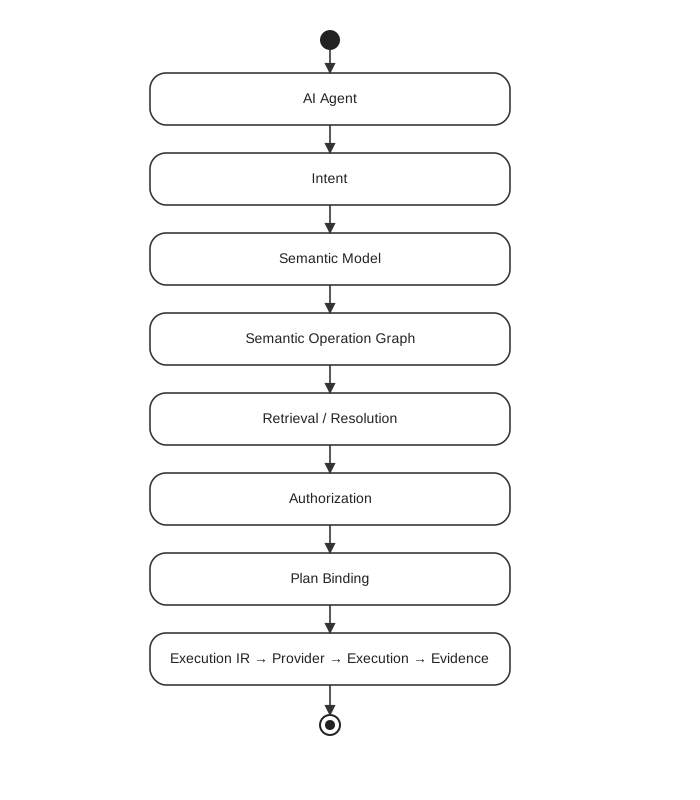
Capability discovery is descriptive. Search results, model output and tool arguments remain untrusted until the normal semantic and authorization stages accept them.
Architecture
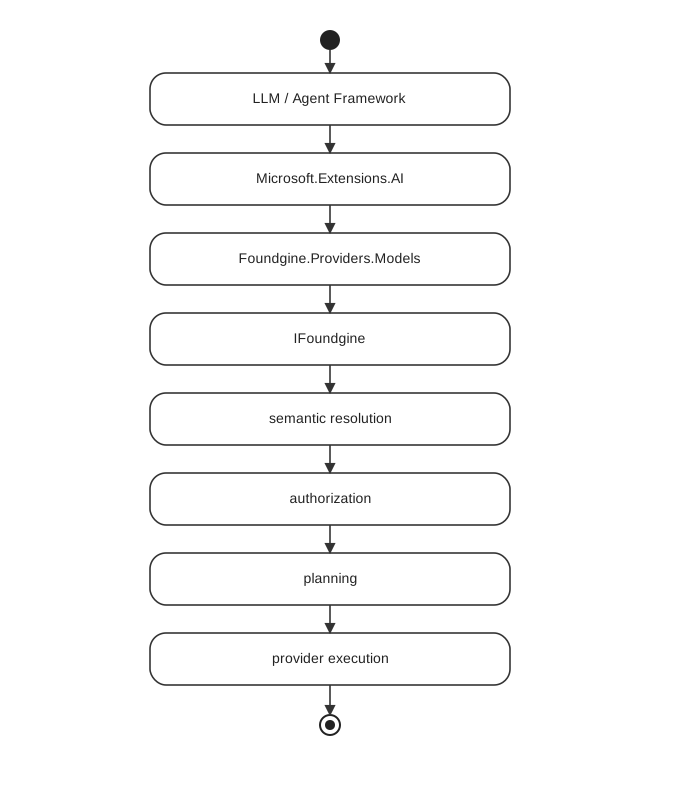
The model is an untrusted producer of intent.
What Foundgine.Providers.Models provides
The package contains:
FoundgineAiToolset;FoundgineAiAgent.
The toolset exposes semantic capability discovery and query execution as AIFunctions.
The agent helper runs a bounded function-calling loop using Microsoft.Extensions.AI.
Capability discovery
An agent can first discover the semantic capabilities available to its execution context.
The flow is:
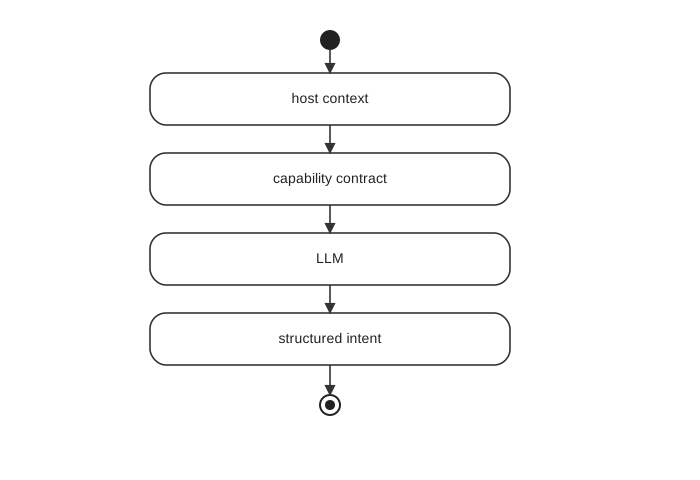
Discovery is descriptive.
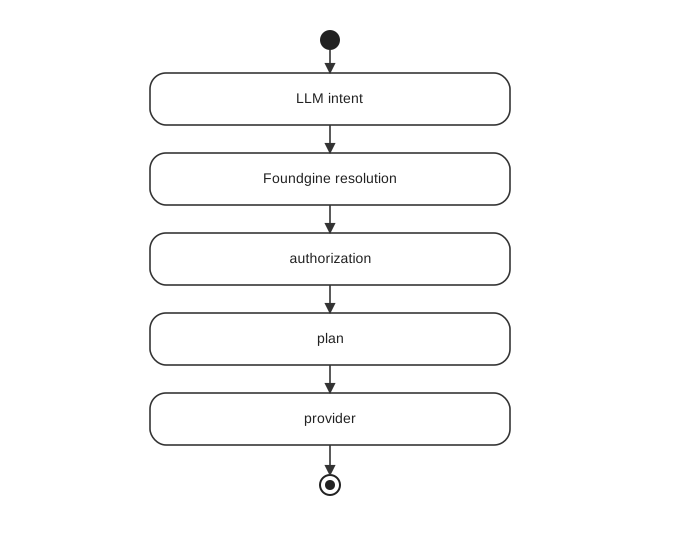
The request is still authorized when executed:
Security boundary
Never let model-generated tool arguments choose:
- identity;
- tenant;
- audience;
- warrant;
- provider;
- connection string;
- authorization policy.
The host supplies the trusted execution context.
Example shape
var toolset = new FoundgineAiToolset(
    foundgine,
    executionContextFactory);

var tools = toolset.CreateTools();
The application supplies its preferred IChatClient and can then use the returned tools in its agent loop.
FoundgineAiAgent
The agent helper uses Microsoft.Extensions.AI function invocation to support:
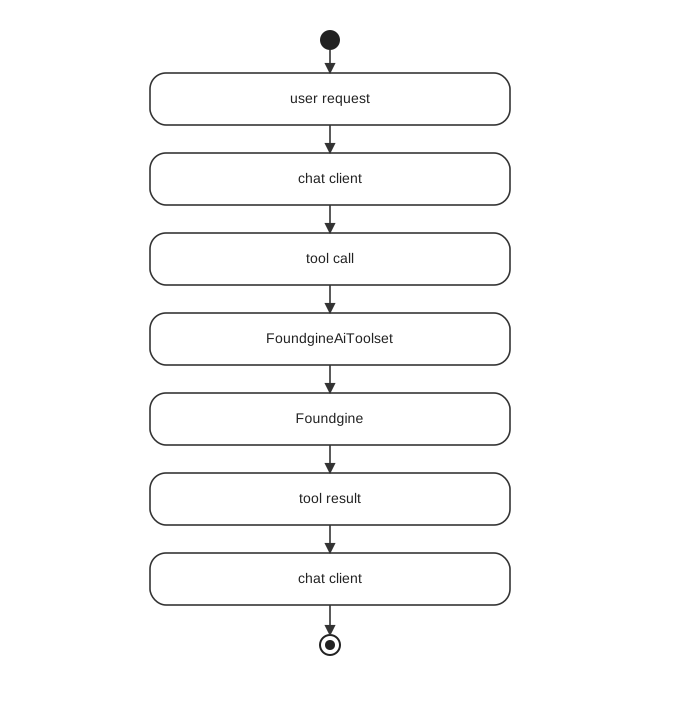
The loop is bounded by tool-iteration/resource controls.
It is not a general autonomous-agent runtime.
What remains application-owned
The host/application owns:
- model/provider credentials;
- model selection;
- system prompts;
- conversation memory;
- business approval;
- authentication;
- identity/tenant context;
- rate limiting;
- deployment;
- observability.
Foundgine only owns the semantic execution boundary.
Prompt injection
Foundgine cannot make arbitrary natural-language instructions trustworthy.
The security strategy is instead to make the execution authority independent of the model:
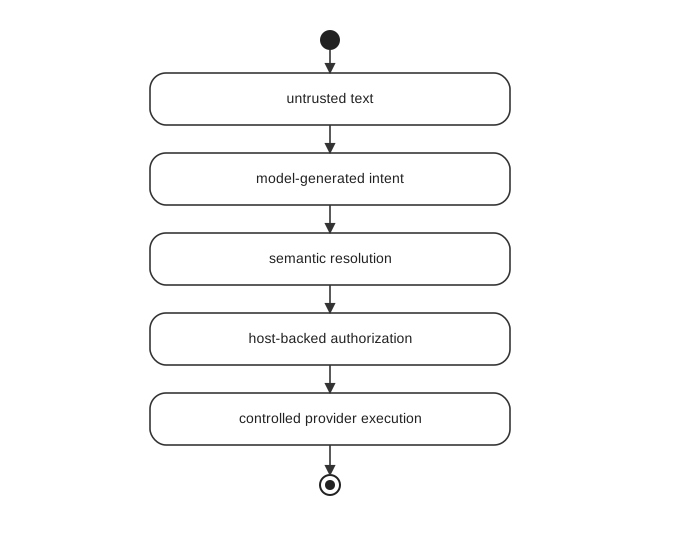
Malicious text in data must not be able to grant the model new Foundgine authority.
Applications still need model/application-level prompt-injection defenses.
Why not SQL generation?
The intended pattern is:
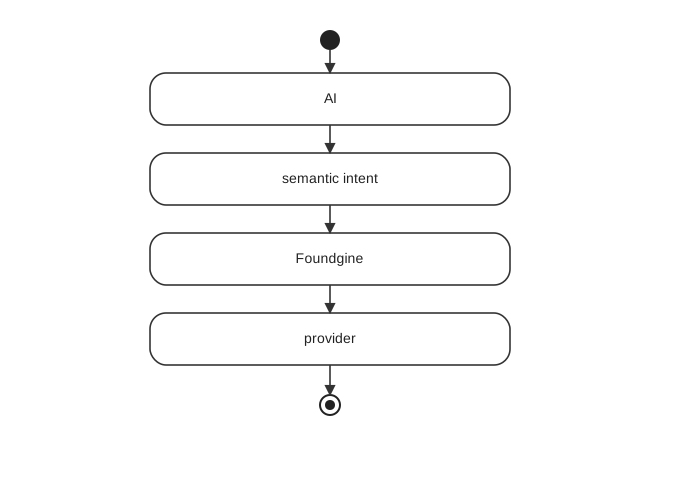
not:
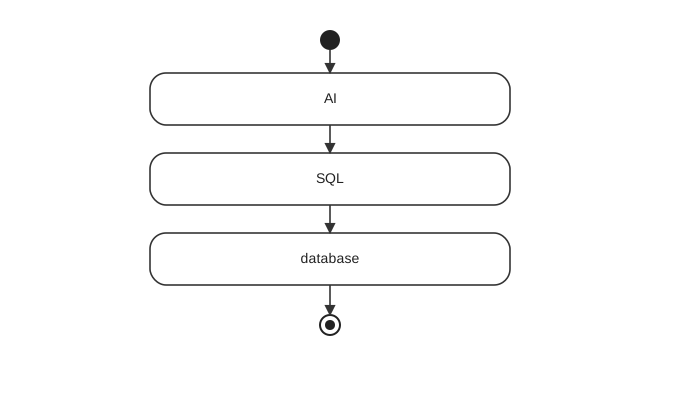
This keeps database credentials and physical schema outside the model’s control.
Relationship to MCP
AI and MCP are independent adapters over the same runtime:
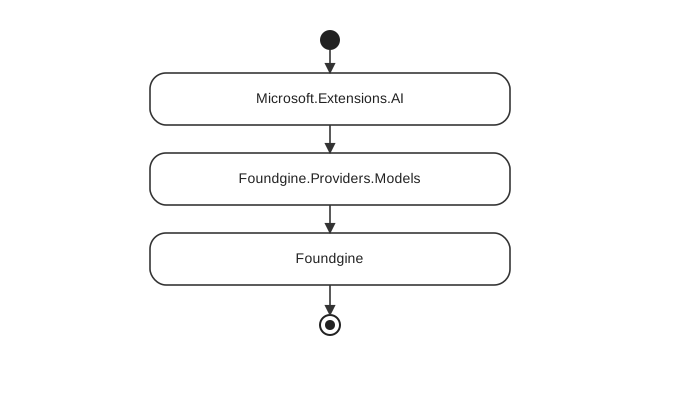
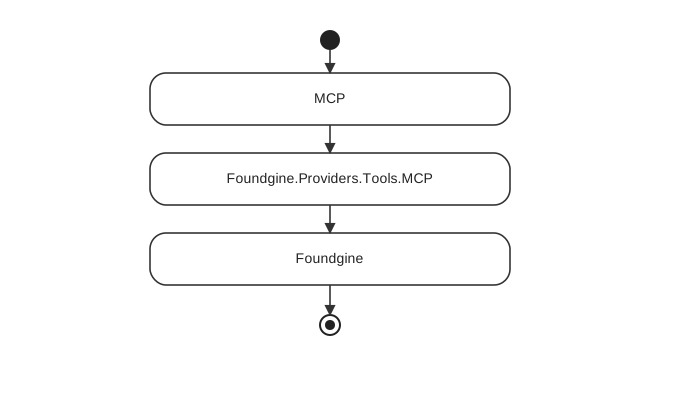
An application can use either or both.
Relationship to GraphQL/JSON
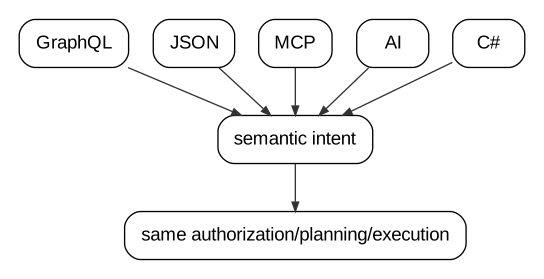
GraphQL and JSON are also intent adapters.
The important property is convergence:
Current scope
This integration does not claim to be:
- an agent framework;
- an LLM gateway;
- an autonomous workflow engine;
- a memory/vector system;
- a model safety platform.
It is a controlled AI tool integration.
Related source package
See src/csharp/Foundgine.Providers/Foundgine.Providers.Models/README.md for the package-level API and security contract.
Next: PostgreSQL E2E